A portable carpet extractor can remove embedded dirt and liquid from vehicle seats, carpets, and floor mats, but the right setup depends on access, stain type, and drying time. Here is what to look for before buying one.
A portable extractor for a car interior should be compact enough to work around seats, powerful enough to recover dirty water, and equipped with a narrow tool for tight spaces. For most vehicles, prioritize tool access, hose length, water recovery, and easy cleanup over a large tank or oversized body.
What a portable extractor does
An extractor sprays cleaning solution into fabric and then pulls the loosened dirt and moisture back into a recovery tank. It is useful for cloth seats, carpeted floors, floor mats, door panels, and some fabric cargo areas.
Extraction is different from simply scrubbing with a damp cloth. The machine can remove more of the suspended dirt and leave less moisture behind when the area is cleaned correctly. It still cannot make every stain disappear, especially if dye, grease, bleach, or permanent discoloration has damaged the fabric.
Always check the vehicle material and the cleaner manufacturer's instructions first. Avoid saturating seat controls, speakers, wiring, airbag areas, and other electrical components.
Features that matter in a car
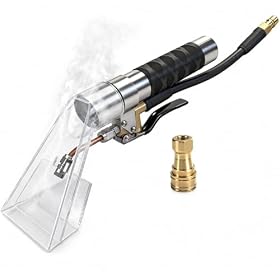
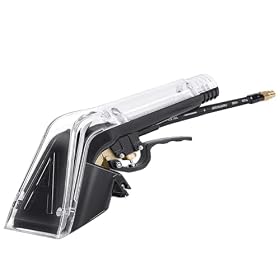
Narrow upholstery and crevice tools
A compact upholstery nozzle is usually more useful than a wide floor head in a vehicle. Look for a tool that can fit between seat bolsters, along seams, around cup holders, and across narrow floor areas.
A transparent nozzle can also help you see whether dirty water is being recovered. A crevice-style attachment may help with edges, but it should not be forced into seams or used to flood gaps.
Hose length and body size
A longer hose lets the machine stay outside the vehicle while you work inside. This reduces the chance of bumping doors and seats with the extractor body. A short hose can still work well in a small car, but it may require more repositioning.
The unit should be easy to carry around the vehicle and stable when placed on a driveway or garage floor. Check the assembled dimensions, not only the storage size, if you have limited room between the seats or inside a cargo area.
Suction and water recovery
Strong water recovery is important because excess moisture can create long drying times and unpleasant odors. Manufacturer suction figures can be difficult to compare across brands because they may use different measurement methods, so treat them as one factor rather than the only buying criterion.
A well-designed upholstery tool, an unobstructed hose, a clean filter, and a good seal can affect real-world recovery as much as a headline power number.
Clean- and dirty-water tank design
A separate solution tank and recovery tank make it easier to keep clean water away from extracted waste. For car work, a smaller tank is often a reasonable tradeoff because it keeps the machine lighter and easier to carry.
Consider:
How easy each tank is to remove and refill
Whether the recovery tank has a clear level indicator
Whether the lid and seals can be rinsed thoroughly
Whether the tanks can be stored open to dry
Whether replacement tanks are available for the specific machine
Do not leave dirty water or damp debris sitting in the extractor after use.
Corded versus cordless operation
A corded model can provide consistent power and is practical if you have a safe outlet near the vehicle. Use the machine only with the electrical protection and extension-cord setup specified by the manufacturer. Keep connections away from standing water.
A cordless extractor can be convenient in a parking area or driveway without a nearby outlet. Its working time depends on battery capacity, the condition of the battery, spray use, and the machine's operating mode. Check whether the battery and charger are included before comparing packages.
Cleaning solution compatibility
Use a formula approved for the extractor and suitable for the vehicle's upholstery or carpet. Too much detergent can leave residue that attracts more soil. Some automotive fabrics also react poorly to harsh chemicals, dyes, solvents, or high-pH cleaners.
When possible, test the solution on a hidden area first. Follow the dilution instructions rather than assuming that stronger concentration will clean better.
Product prices and availability are accurate as of the date/time indicated and are subject to change. Any price and availability information displayed on Amazon.com at the time of purchase will apply to the purchase of this product.
How to use an extractor on a car interior
Vacuum first. Remove loose dirt, sand, pet hair, and debris before adding liquid. Dry debris is easier to remove before it becomes mud.
Check the material. Look for care labels and avoid wet cleaning materials that are not designed for water exposure.
Pre-treat carefully. Apply an appropriate cleaner to the stain or brush it lightly according to the product directions. Do not flood the area.
Work in small sections. Use controlled spray passes, followed by several slow extraction passes with little or no additional spray.
Recover as much moisture as possible. Keep the nozzle moving and avoid holding it in one place for too long.
Rinse when appropriate. If the formula instructions call for rinsing, use clean water sparingly and extract it thoroughly.
Dry the vehicle. Open doors or windows where safe, use ventilation, and avoid closing the vehicle while fabric is still noticeably damp.
Clean the machine. Empty and rinse the recovery tank, clean the tool, inspect the filter, and leave removable parts open to dry.
Do not use excessive water around seat-mounted controls, seat heaters, electronic modules, door switches, speakers, or airbag locations. If you are unsure whether a section is safe to wet, use a lightly dampened cloth instead or consult the vehicle and tool instructions.
Product prices and availability are accurate as of the date/time indicated and are subject to change. Any price and availability information displayed on Amazon.com at the time of purchase will apply to the purchase of this product.
What size extractor should you choose?
A compact extractor is usually the most convenient choice for occasional car detailing, spot cleaning, and small households. It is easier to store and carry, but the smaller tanks may require more frequent refills and emptying.
A larger portable unit may suit frequent cleaning, multiple vehicles, heavily soiled interiors, or larger carpeted areas. The tradeoff is more storage space and more weight. A large tank does not automatically mean better cleaning if the machine is difficult to maneuver or the upholstery tool is poorly suited to tight spaces.
Product prices and availability are accurate as of the date/time indicated and are subject to change. Any price and availability information displayed on Amazon.com at the time of purchase will apply to the purchase of this product.
When a portable extractor is not the right tool
An extractor is not ideal for every interior surface. It may be unsuitable for leather, suede, delicate headliners, loose-backed mats, untreated natural fibers, or materials with water-sensitive adhesives. Use the material manufacturer's care instructions as the authority.
It also may not solve heavy grease, old dye transfer, mold contamination, or odors originating beneath the upholstery. Persistent odor after proper cleaning and drying can indicate contamination in padding or hidden areas, which may require professional service.
Common buying mistakes
Choosing a machine that is too large
A large body and wide floor tool can be awkward inside a vehicle. Confirm that the tool can reach narrow sections and that the hose is long enough to keep the machine outside the cabin.
Ignoring replacement parts
Filters, hoses, tank lids, seals, and upholstery tools can wear or become damaged. Check whether replacement parts are available for the exact model before buying, especially if you expect frequent use.
Focusing only on spray pressure
More spray is not always better in a car. Excess liquid can soak padding and extend drying time. Controlled application and effective recovery are more useful than flooding the fabric.
Closing the car before it is dry
Damp upholstery can develop a musty odor and may encourage microbial growth. Allow adequate ventilation and drying time before reinstalling mats or closing the vehicle for long periods.
Bottom line
The best portable extractor for a car interior is a compact, serviceable unit with a narrow upholstery tool, useful hose reach, reliable water recovery, and tanks that are easy to clean. Choose a smaller model for occasional spot cleaning and a larger portable unit when you regularly clean several vehicles or extensive fabric areas. Use modest amounts of solution, extract slowly, and protect electrical and water-sensitive parts of the vehicle.
FAQ
Can I use a portable carpet extractor on car seats?
You can use one on water-safe cloth seats when the vehicle and extractor instructions permit wet cleaning. Avoid saturating seat controls, heating elements, wiring, airbags, and other electrical areas. Test the cleaner on a hidden section first.
What matters most in a car upholstery extractor?
A narrow upholstery tool, adequate hose reach, effective water recovery, manageable size, and easy-to-clean tanks usually matter more than maximum tank capacity or a single advertised power number.
How do I dry car seats after extraction?
Extract slowly to remove as much moisture as possible, then ventilate the vehicle with doors or windows open when safe. Use airflow and allow the fabric to dry completely before closing the vehicle for an extended period.
Can I use household carpet cleaner in a car?
Only if the formula is approved for the extractor and suitable for the vehicle's specific upholstery or carpet. Follow dilution instructions and test a hidden area before cleaning a visible section.