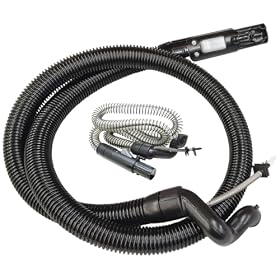
A longer hose can make stair cleaning easier, but carpet cleaner hoses are not universal. Check your machine’s approved accessories, connection type, hose diameter, and whether the hose carries both recovery water and cleaning solution before buying.
A longer hose can make cleaning stairs much easier by keeping the carpet cleaner on a level floor instead of lifting it from step to step. The important catch is compatibility: carpet cleaner hoses are not universal, and some machines need a dedicated hose with both suction and solution connections. Choose an accessory approved for your cleaner, then confirm the length, connector, and attachment requirements before ordering.
What to check before buying
Machine compatibility
Start with the carpet cleaner’s manual or manufacturer accessory list. Look for a hose specifically listed for your model or product family. A hose that appears to fit may still fail to seal, spray cleaning solution, or trigger the machine’s spray valve correctly.
Avoid assuming that hoses for portable spot cleaners, upright carpet cleaners, and commercial extractors are interchangeable. Their connectors, internal passages, and attachment controls can differ substantially.
Hose length
Measure the distance from where the machine will sit to the highest stair you need to clean, then allow some extra length for bends and movement. A hose that is barely long enough can pull on the machine or kink at the stair edge.
More length is not always better. Excess hose adds weight, can be harder to store, and may reduce practical suction if the hose is sharply bent, crushed, or poorly matched to the machine. For most homes, the best choice is the shortest approved hose that reaches the stairs comfortably while leaving the machine safely on the floor.
Suction and solution connections
Some carpet cleaner hoses carry only dirty water to the machine. Others include a separate solution line that sends cleaning fluid to a stair tool. If your machine sprays through the hose, the replacement must support both functions.
Check for:
A recovery or suction connection
A cleaning-solution connection, if your machine uses one
A compatible spray trigger or valve
Matching seals and locking collars
The correct hand tool connection at the end of the hose
A suction-only hose may work for extracting water with a compatible tool but will not necessarily spray solution. Do not force a connector or modify the hose to make it fit; leaks and poor extraction can result.
Choosing a hose for stair cleaning
Keep the machine on a level surface
Position the cleaner on the floor at the bottom or top of the staircase, depending on where the nearest outlet and water source are located. Keep it away from stair edges where it could tip or be pulled down by hose tension.
If the machine must be placed on a landing, confirm that the surface is stable and that the recovery tank and solution tank remain upright. Follow the manufacturer’s instructions for operating angle and placement.
Consider the hand tool
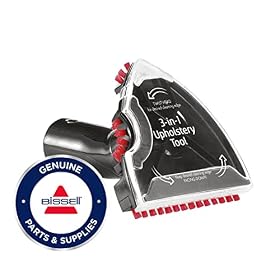
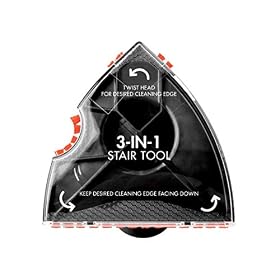
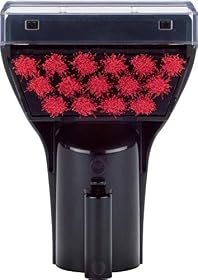
A longer hose is useful only if the attached tool is suitable for stairs. A narrow upholstery or stair tool is usually easier to control than a full-width floor head. For heavily soiled stair treads, a tool with a brush may help loosen debris before extraction.
Check whether the hose includes a tool or whether the tool must be purchased separately. The hose-end connector needs to match the tool, not just the main machine.
Account for hose storage
Long hoses can kink when coiled tightly. Store the hose in a large, loose loop and avoid placing heavy objects on it. If the hose has a solution line, follow any instructions for draining or flushing it after use.
Product prices and availability are accurate as of the date/time indicated and are subject to change. Any price and availability information displayed on Amazon.com at the time of purchase will apply to the purchase of this product.
How to use a longer hose safely on stairs
Vacuum loose dirt and pet hair from the stairs first.
Put the carpet cleaner on a stable, level surface.
Connect the hose fully and check that each locking collar or fitting is secured.
Fill the solution tank and empty the recovery tank according to the cleaner’s instructions.
Start at the highest stair or farthest point so you do not step on freshly cleaned carpet.
Keep the hose in a gentle curve rather than a sharp bend.
Use controlled spray passes and slower extraction passes, without flooding the stair.
Check that the recovery tank is not full during extended cleaning.
Flush or drain the hose as directed after use, then allow it to dry before storage.
Keep electrical connections, the machine, and the power cord away from standing water. Stop immediately if the hose leaks, the cleaner sounds abnormal, or the machine begins to move toward the stair edge. For damaged cords, plugs, or electrical components, disconnect the cleaner and consult the manufacturer or a qualified service professional.
Product prices and availability are accurate as of the date/time indicated and are subject to change. Any price and availability information displayed on Amazon.com at the time of purchase will apply to the purchase of this product.
Common problems with longer hoses
The hose does not connect
Confirm that you bought a hose for the exact cleaner model or an explicitly compatible product family. Check for an adapter, locking ring, or removable port cover that the instructions require. Do not use tape, clamps, or improvised fittings as a pressure or vacuum seal.
The tool sprays but has weak extraction
Look for a kink or crushed section, a blocked tool opening, or a full recovery tank. Remove the tool and inspect the hose ends for lint, hair, and dried cleaning formula. A hose that is much longer than the cleaner’s approved accessory may also be unsuitable for the machine.
The hose has suction but does not spray
The hose may be suction-only, or the solution line may not be connected correctly. Check the solution tank, pump setting, trigger, and hose fitting. If the machine sprays through a separate internal line, an incompatible hose will not correct the problem.
Water or solution leaks at a connection
Turn off and unplug the cleaner before inspecting the fittings. Check that seals are present, clean, and seated correctly. Replace damaged O-rings or hose assemblies with manufacturer-approved parts. Persistent leaks are a reason to stop using the cleaner until the connection is repaired.
The cleaner loses suction after a few minutes
Empty the recovery tank and clean the applicable filter according to the manual. Inspect the tool and hose for a clog, then check the lid and tank seals. If suction remains poor with the original hose and a clean, correctly assembled machine, the issue may involve the motor, pump, or internal seal and may require service.
Product prices and availability are accurate as of the date/time indicated and are subject to change. Any price and availability information displayed on Amazon.com at the time of purchase will apply to the purchase of this product.
When to buy a replacement hose instead
A replacement hose is reasonable when the original has cracks, flattened sections, leaking fittings, or a permanently damaged solution line. Match the replacement by model and function, not just by visible connector size.
If your cleaner is old, has weak suction with every hose, leaks from the machine body, or needs several discontinued parts, replacing the cleaner may make more sense than adapting a longer hose. For a cleaner that works properly but cannot reach the stairs, an approved hose and compatible stair tool are usually the more practical purchase.
Usually not. Carpet cleaner hoses may differ in connector shape, diameter, seals, and whether they carry cleaning solution as well as dirty water. Use a hose listed as compatible with your exact cleaner or approved product family.
How long should a hose be for cleaning stairs?
Choose the shortest approved hose that reaches the highest stair while the machine remains stable on the floor or landing. Leave extra length for gentle bends, but avoid unnecessary hose that is difficult to manage or store.
Do I need a special tool for carpeted stairs?
Often, yes. A compact stair or upholstery tool is generally easier to control on narrow treads than a full-size floor head. Confirm that the tool fits the hose and supports the machine’s spray and suction functions.
Why does my longer hose have suction but no spray?
It may be a suction-only hose, or its solution connection may be missing, blocked, or incorrectly attached. Check the manual, solution tank, trigger, and fittings. Do not modify the hose to add a spray connection.