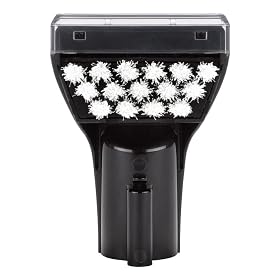
If your upholstery tool sprays but does not pull dirty water from a sofa, check the recovery filter, tool opening, hose, seals, setup, and tank before assuming the motor has failed.
If an upholstery tool sprays cleaning solution but does not extract water from a sofa, the most likely causes are a blocked tool opening, clogged hose, dirty recovery filter, poor seal, incorrect setup, or a full recovery tank. Unplug the carpet cleaner before inspecting parts, and follow the manufacturer’s instructions for your specific machine.
Start with the recovery filter and tool opening
Many carpet cleaners have a small screen, float filter, or lint filter in the dirty-water path. Pet hair, upholstery fibers, and detergent residue can restrict airflow enough to stop extraction.
Turn off and unplug the carpet cleaner.
Remove the recovery tank and locate its filter or float assembly.
Rinse removable filters with clean water if the manual allows it.
Remove visible hair or lint from the upholstery tool’s suction opening.
Let washable parts dry as directed before reinstalling them.
Do not run the machine without a filter or float assembly if the manufacturer requires those parts. A missing filter can allow debris into the recovery system and may cause the tank to overflow.
Check the upholstery tool for a clog
A sofa can release lint, crumbs, pet hair, and fabric fibers that collect at the narrow suction slot. A clog may let the tool spray normally while preventing it from pulling water back up.
With the machine unplugged, inspect the tool opening and remove debris with your fingers or a soft brush. Do not force a sharp object deep into the tool, because it can damage the nozzle or internal seal.
If the tool has a removable nozzle cover, remove and clean it only as described in the manual. Reinstall the cover firmly; even a small gap can reduce suction.
Product prices and availability are accurate as of the date/time indicated and are subject to change. Any price and availability information displayed on Amazon.com at the time of purchase will apply to the purchase of this product.
Inspect the hose for a blockage or kink
Disconnect the upholstery hose at both ends if your cleaner allows it. Look through the hose and check for:
A tight bend behind furniture or around the machine
Compressed sections of hose
Hair, fabric, or dried detergent inside the hose
A loose connection at the tool or cleaner body
Straighten the hose and reconnect it until the fittings are fully seated. If the hose is blocked, use only the cleaning method approved by the manufacturer. Avoid pushing a rigid object through a hose unless the manual specifically permits it.
A split hose can also cause weak extraction. If you hear air being pulled through a crack or see water leaking from the hose, replacement is usually more practical than trying to seal a flexible hose permanently.
Product prices and availability are accurate as of the date/time indicated and are subject to change. Any price and availability information displayed on Amazon.com at the time of purchase will apply to the purchase of this product.
Look for leaks and damaged seals
Extraction depends on an airtight path from the upholstery tool to the recovery tank. Check the tool connection, hose couplings, tank lid, gasket, and float assembly for gaps or damage.
Clean hair and dried formula from mating surfaces, then reseat the tank and lid. Inspect rubber O-rings and gaskets for flattening, cracks, or displacement. A damaged seal can cause poor suction even when the motor is running normally.
Do not operate the cleaner if water is reaching electrical controls, the power cord, or the plug. Unplug it and arrange service or replace the damaged part according to the manufacturer’s guidance.
Product prices and availability are accurate as of the date/time indicated and are subject to change. Any price and availability information displayed on Amazon.com at the time of purchase will apply to the purchase of this product.
Confirm the machine is set up for upholstery cleaning
Some carpet cleaners use a selector, hose port, tool trigger, or separate upholstery setting. Confirm that:
The hose is connected to the correct port.
The upholstery tool is attached in the correct direction.
The recovery tank and lid are fully installed.
The clean-water tank has enough water for the selected cleaning mode.
The tool’s spray trigger is not being held continuously during extraction.
For sofa cleaning, use short spray passes and then make several slow passes without spraying. Holding the spray trigger while moving too quickly can leave the fabric saturated and make it appear that extraction is weak.
Before cleaning the whole sofa, check the care label and test an inconspicuous area for colorfastness. Use only a formula approved for your carpet cleaner and suitable for the upholstery fabric.
Empty the recovery tank and check the float
A full dirty-water tank can stop extraction or activate a float that blocks airflow. Empty the recovery tank, rinse it, and make sure the float moves freely if the design allows inspection.
If the tank fills unusually quickly, check whether the machine is picking up excess solution because the sofa has been over-wet. Let the fabric dry with good ventilation rather than repeatedly adding more water.
If the tank is empty but the float remains stuck in the shutoff position, clean around the float and reinstall the tank correctly. Do not bypass the float; it helps prevent liquid from reaching the motor.
Test whether the problem is the tool or the cleaner
After cleaning the tool, hose, filter, and tanks, perform a brief comparison test using the manufacturer-approved method. If the carpet cleaner extracts normally with its floor head but not with the upholstery tool, the upholstery tool, hose, or tool connection is the likely fault.
If neither the floor head nor the upholstery tool extracts, the problem may be farther inside the recovery path or motor system. Stop using the machine if it makes unusual noises, smells hot, trips a circuit breaker, or shows signs of liquid entering the motor area.
Electrical and motor repairs should follow the manufacturer’s service instructions or be handled by a qualified technician. Do not open the motor housing while the machine is connected to power.
When to replace the tool or hose
Replace the upholstery tool when its suction opening is cracked, its nozzle no longer seals, or its internal parts remain blocked after proper cleaning. Replace the hose when it has a split, collapsed section, damaged connector, or persistent internal blockage.
A replacement part is generally the sensible next step when the carpet cleaner sprays correctly, the recovery tank and filters are clean, and extraction works with another attachment. Consider replacing the carpet cleaner itself only when the machine fails to extract with every attachment, has motor or electrical symptoms, or requires a major repair that is not supported by available parts.
How to prevent weak sofa extraction
Vacuum loose hair and debris from the sofa before using the cleaner.
Use the recommended upholstery formula and dilution.
Avoid soaking the fabric with repeated spray passes.
Rinse the tool and hose as directed after cleaning.
Empty and clean the recovery tank after each use.
Store the tool and hose so they are not crushed or sharply kinked.
Allow the sofa to dry fully with ventilation before normal use.
FAQ
Why does my upholstery tool spray but not suction?
A clogged tool opening, dirty recovery filter, blocked hose, full recovery tank, poor tank seal, or stuck float can allow spraying while preventing suction. Clean and reseat these parts before considering a motor problem.
Can a carpet cleaner’s upholstery tool be unclogged with a wire?
Avoid using a wire or other sharp object unless the manufacturer specifically approves it. A soft brush and the cleaning procedure in the manual are safer ways to remove debris without damaging the nozzle or hose.
Why is my sofa still very wet after using the upholstery tool?
The sofa may have been over-sprayed, or the tool may have weak extraction from a clog, leak, full tank, or poor seal. Stop spraying, empty the recovery tank, clean the extraction path, and make slow dry passes over the fabric.
Should I replace the upholstery tool or the carpet cleaner?
Replace the tool or hose when extraction works with another attachment and the upholstery parts are cracked, leaking, or blocked. Consider service or replacement of the cleaner when extraction fails with every attachment or the machine has electrical or motor symptoms.