The best upright carpet cleaner for weekly stairs is not simply the one with the strongest floor cleaning. Look for a usable hose-and-tool setup, enough reach for a full staircase, manageable lifting weight, and tanks that are easy to refill and empty.
An upright carpet cleaner can work well on both floors and stairs, but only if its hose, stair tool, and carrying design make above-floor cleaning practical. For weekly stair cleaning, prioritize hose reach and flexibility first, then check the machine’s lift weight, tool design, tank capacity, and ability to recover water without repeated trips to the sink.
A floor-only upright may clean carpet effectively but become frustrating on stairs if the hose is short, the tool is awkward, or the machine is too heavy to carry safely. The right choice is an upright with a genuine above-floor cleaning setup—not merely a detachable handle or a small accessory with limited reach.
What makes an upright good for stairs?
Look for these features before focusing on brush count or other floor-cleaning specifications:
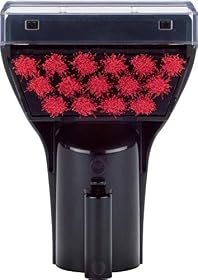
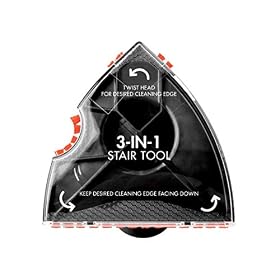
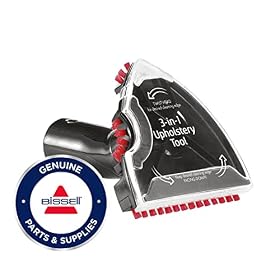
A dedicated stair or upholstery tool: A compact tool is easier to position on narrow treads, risers, and edges than the full floor head.
Useful hose reach: The hose should reach several steps while the cleaner remains on a stable landing or the floor below. A longer hose is helpful, but it should also flex without sharply kinking.
A secure hose connection: The hose should lock firmly into the machine. A loose connection can reduce suction or allow dirty water to leak.
A manageable carrying weight: You may need to lift the cleaner between levels or carry it up and down a staircase. Check the listed weight with tanks installed if that information is available.
Separate clean- and dirty-water tanks: This is generally easier to manage than a system that combines solution and recovered water in one container.
Convenient tool storage: If the stair tool has no secure storage location, it is easier to misplace and less likely to be ready for weekly use.
The most important specification: hose reach
Hose length is more important than the cleaner’s floor width when stairs are a weekly task. Measure the distance from the location where the machine can sit securely to the highest step you need to clean. Add extra reach for moving the tool across each tread and reaching the risers.
A hose that is technically long enough may still be inconvenient if it pulls the cleaner toward the staircase. Keep the machine on a level, stable surface whenever possible. Do not place it on steps where it could slide or tip.
Also check whether the manufacturer’s stated hose length includes an extension or accessory. A longer hose can improve reach, but excessive length may be harder to store and may slightly reduce convenience if it tangles.
Product prices and availability are accurate as of the date/time indicated and are subject to change. Any price and availability information displayed on Amazon.com at the time of purchase will apply to the purchase of this product.
Choose the right stair tool
A stair tool should be narrow enough for individual treads and capable of covering the riser without forcing you to scrub at an awkward angle. A tool with a compact suction opening can be easier to control around stair edges, but the exact design varies by machine.
For pet hair, tracked-in dirt, and embedded debris, a powered hand tool may provide more agitation than a passive upholstery or stair tool. It can also be bulkier, noisier, and more demanding to clean. If you mainly remove liquid spills and surface stains, a simple extraction tool may be sufficient.
Before buying, confirm that the tool is included rather than sold separately. Check whether replacement tools and hoses are available for the specific machine.
Product prices and availability are accurate as of the date/time indicated and are subject to change. Any price and availability information displayed on Amazon.com at the time of purchase will apply to the purchase of this product.
Weight matters more on stairs than on floors
An upright can feel easy to push across a room and still be difficult to carry between floors. Water in the clean tank and recovered water in the dirty tank add weight during a cleaning session.
Compare:
The cleaner’s empty weight
The weight with both tanks installed
Handle placement when carrying
Whether the tanks can be removed before lifting
Whether the machine can remain on a landing while the hose reaches the steps
If you have limited strength, a split-level home, or a staircase without a safe landing, a lighter machine or a separate portable spot cleaner may be more practical than a large upright. Do not carry a full cleaner in a way that blocks your view of the steps.
Product prices and availability are accurate as of the date/time indicated and are subject to change. Any price and availability information displayed on Amazon.com at the time of purchase will apply to the purchase of this product.
Tank capacity and stair-cleaning convenience
Larger tanks reduce refill and emptying trips during whole-floor cleaning, but they also add weight. For stairs, a smaller or medium-capacity tank can be a reasonable tradeoff if it makes the machine easier to lift.
Check whether the clean-water tank has a clear fill line and whether the dirty-water tank is easy to empty without splashing. A wide opening, removable lid, and accessible filter can make frequent stair cleaning less unpleasant.
Use only the cleaning formula and dilution recommended by the manufacturer. Too much solution can leave residue in the carpet and may create excessive foam in the recovery system.
Extraction and drying time
Stairs can be difficult to ventilate, especially when they are enclosed or carpeted on every surface. An upright that extracts water effectively can help reduce drying time, but the machine’s result also depends on your technique and the carpet itself.
For better drying:
Vacuum loose dirt and pet hair before wet cleaning.
Apply solution according to the label rather than oversaturating the carpet.
Make controlled wet passes instead of repeatedly flooding the same area.
Follow with slower suction-only passes if the machine instructions allow them.
Increase airflow with ventilation or fans after cleaning.
Keep people and pets off the stairs until the carpet is dry.
Never assume that more water means better cleaning. Overwetting can lengthen drying time and may contribute to odors or damage on carpet, padding, wood, or other underlying materials.
Upright versus portable cleaner for weekly stairs
An upright is usually the better choice when you also clean multiple carpeted rooms. It offers a floor-cleaning head, larger tanks, and a single machine for most carpet maintenance.
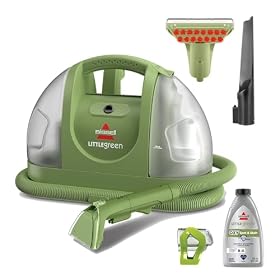
A portable spot cleaner may be the better primary choice when stairs are the main job, storage space is limited, or you need to carry the cleaner frequently. It is generally easier to position on or near stairs, but it may take longer to clean large carpeted rooms.
For a home with substantial floor carpet and weekly stairs, an upright with a long hose and a useful stair tool is the most balanced format. For mostly hard floors with one carpeted staircase, a compact portable extractor may avoid paying the weight and storage penalty of a full upright.
Features that matter less than they appear
Some specifications can be useful, but they should not outweigh basic stair usability:
Cleaning-path width: A wider head covers rooms faster but offers little advantage on narrow steps.
Number of brush rows: Brush design and contact with the carpet matter more than a count alone.
Very large tanks: More capacity is useful for rooms, but extra water makes carrying harder.
Long power cords: Helpful for floors, but they do not replace hose reach on stairs.
Extra attachments: Choose attachments you will actually store and use; a large accessory set does not guarantee better stair cleaning.
How to use an upright on stairs safely
Read the manufacturer’s instructions before using the hose and above-floor tools. Keep the machine on a stable, level surface, and route the hose and power cord so they do not create a trip hazard.
Clean one step at a time, starting at the upper end if that keeps you from walking over damp carpet. Avoid pulling the machine by the hose or cord. If the cleaner must be placed on a landing, make sure it cannot roll toward the edge.
For loose stair runners or carpet with uncertain backing, test the cleaning method in an inconspicuous area first. Some materials are not suitable for wet extraction.
Buying recommendation
For weekly stair cleaning, choose the upright that offers the best combination of usable hose reach, a dedicated stair tool, manageable lift weight, secure above-floor connections, and easy tank handling. Floor-cleaning performance still matters, but a machine that is excellent on rooms and awkward on stairs will be a poor fit for this use.
If the staircase is your priority, measure the required reach and decide where the machine can safely sit before shopping. If no upright can reach comfortably without being placed on the steps, choose a lighter machine with a longer supported hose or consider a portable extractor instead.
FAQ
Can any upright carpet cleaner be used on stairs?
No. It needs a hose and an above-floor tool designed for upholstery or stairs. A floor-only upright may not reach safely or clean narrow steps effectively.
How long should the hose be for cleaning stairs?
There is no universal length. Measure from a safe, level location for the machine to the highest step, then allow extra reach for moving across each tread and cleaning the risers.
Is a portable carpet cleaner better than an upright for stairs?
A portable cleaner is often easier to lift and position, especially when stairs are the main task. An upright is usually more convenient when you also clean several carpeted rooms.
Should I choose a large tank for weekly stair cleaning?
A large tank reduces refill trips but increases carrying weight. Choose the largest capacity you can safely lift, or keep the machine on a landing if the hose allows it.