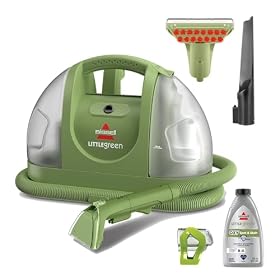
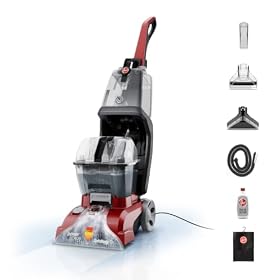
Best machine if you mostly clean one hallway runner
If one hallway runner is your main cleaning job, a compact portable carpet cleaner is usually the most practical choice. It takes less storage space, is easier to carry, and can handle spot cleaning without the bulk of a full-size carpet washer.
Best machine if you mostly clean one hallway runner
If you mostly clean one hallway runner, choose a compact portable carpet cleaner unless you regularly deep-clean several large carpeted areas. A portable unit is easier to carry, store, and maneuver around furniture. It can also be a better fit for a narrow runner than a bulky upright.
The best choice depends on the runner’s length, pile, stain frequency, and whether you need to clean only the carpet or nearby upholstery and stairs too.
Choose a portable carpet cleaner for most hallway runners
You need to remove pet accidents, tracked-in dirt, or occasional spills.
The runner is narrow or surrounded by furniture and walls.
You want one machine for stairs, upholstery, car interiors, and small carpeted areas.
Portable cleaners usually have a separate clean-water tank and recovery tank, a hose, and a handheld cleaning tool. The hose gives you more control over a narrow runner, although cleaning a long runner may require moving the machine as you work.
Why size matters
A compact machine can be easier to lift and store, but its smaller tanks may require more frequent refilling and emptying. That is usually a minor inconvenience for one runner, but it becomes tiring if you clean several rooms at once.
Check the machine’s hose length, tool width, tank access, and storage footprint. A narrow tool can help you work along the runner without repeatedly bumping walls or furniture.
When a full-size upright is the better choice
Consider a full-size carpet cleaner if the hallway runner is only part of a larger cleaning routine. An upright may be more convenient when you regularly clean:
Multiple rooms of wall-to-wall carpet
Several large area rugs
A long runner that needs frequent full-length cleaning
Carpet with deeply embedded soil that benefits from repeated passes
An upright generally covers more carpet with each pass, so it can reduce the time spent cleaning large areas. The tradeoff is greater storage space, more weight, and less flexibility for stairs and upholstery.
Do not choose an upright solely because it has a larger tank. For a single narrow runner, a larger tank may add bulk without providing much practical benefit.
Product prices and availability are accurate as of the date/time indicated and are subject to change. Any price and availability information displayed on Amazon.com at the time of purchase will apply to the purchase of this product.
Features that matter most for one runner
A suitable cleaning tool
The tool should be narrow enough to fit the runner and easy to move in straight, overlapping passes. A hand tool with a transparent suction area can make it easier to see whether dirty water is still being recovered.
For a runner with long or delicate fibers, follow the carpet manufacturer’s care instructions. Aggressive brushing or excessive moisture can damage some materials.
Strong water recovery
Water extraction matters as much as spray. A cleaner that leaves the runner very wet can increase drying time and may contribute to musty odors or carpet damage if the area remains damp.
Use slow passes and avoid flooding the carpet. After applying solution, make additional passes with the spray trigger released to recover moisture.
Separate tanks
Separate clean- and dirty-water tanks make it easier to avoid putting recovered soil back onto the carpet. Look for tanks that are easy to remove, fill, empty, and rinse. Small openings or complicated tank parts can make routine cleanup more frustrating.
Hose and cord reach
Measure the distance from the nearest outlet to the far end of the runner. A short cord or hose may force you to reposition the machine repeatedly. Do not pull the machine by the hose or power cord unless the manufacturer specifically permits it.
Formula compatibility
Use only the cleaning formula and dilution recommended by the machine manufacturer. Too much detergent can leave residue that attracts new soil, while an unsuitable formula may create excessive foam or damage internal components.
For pet stains, a formula labeled for pet messes may be useful, but it will not replace proper removal of the source of the odor. Blot or remove solid material first, and test any solution in an inconspicuous area.
Product prices and availability are accurate as of the date/time indicated and are subject to change. Any price and availability information displayed on Amazon.com at the time of purchase will apply to the purchase of this product.
How to clean the runner without over-wetting it
Vacuum slowly first. Remove loose grit and hair before adding water or formula.
Check the care label. Confirm that the runner is suitable for water-based cleaning.
Test a hidden area. Check for color bleeding, texture changes, or damage.
Use the recommended solution ratio. Do not add extra detergent to make the cleaner stronger.
Work in short sections. Overlap passes slightly rather than repeatedly soaking the same spot.
Make dry passes. Release the spray trigger and move slowly to extract more water.
Improve airflow. Open doors or use fans, while keeping electrical equipment and cords away from water.
Keep traffic off the runner. Wait until it is fully dry before walking on it.
If the runner has a non-slip backing, check its care instructions carefully. Excess moisture or heat can affect some backing materials.
Product prices and availability are accurate as of the date/time indicated and are subject to change. Any price and availability information displayed on Amazon.com at the time of purchase will apply to the purchase of this product.
Portable cleaner or spot cleaner?
A very small spot cleaner can be enough if you only handle isolated spills and pet accidents. It is convenient for quick response, but it may be slow for cleaning an entire hallway runner from end to end.
Choose a larger portable carpet cleaner when you want to clean the whole runner periodically. Choose a small spot cleaner when the runner is usually clean and you mainly need emergency stain treatment.
When replacing the runner may be more sensible
A machine cannot always correct permanent discoloration, worn traffic lanes, delamination, or damage caused by repeated soaking. Consider professional cleaning or replacement when:
The backing is curling, separating, or cracking.
The runner has persistent odor after thorough cleaning and drying.
The fibers remain matted or discolored after appropriate treatment.
Cleaning causes dye transfer or visible texture changes.
For valuable, antique, handmade, or natural-fiber runners, consult a qualified rug-cleaning professional before using a household carpet cleaner.
Bottom line
For one hallway runner, start with a portable carpet cleaner with separate tanks, a manageable hose, a suitably narrow tool, and good water recovery. It is usually a better balance of control, storage, and versatility than a full-size upright. Choose an upright only if the runner is part of a larger carpet-cleaning workload or needs frequent whole-area cleaning.
FAQ
What type of carpet cleaner is best for one hallway runner?
A compact portable carpet cleaner is usually the best fit. It is easier to maneuver and store than an upright while still providing a separate clean-water tank, dirty-water recovery, and a handheld tool for cleaning the runner.
Can a small spot cleaner clean an entire hallway runner?
It can, but the process may be slow because the tool covers a small area and the tanks may be limited. A larger portable carpet cleaner is more practical if you plan to clean the whole runner regularly.
How often should I deep-clean a hallway runner?
Clean it when it becomes visibly soiled, develops an odor, or receives a major spill. Vacuuming regularly helps reduce the need for frequent wet cleaning, and the runner should be allowed to dry completely after every extraction cleaning.
Should I use a full-size upright for a narrow runner?
Only if you also clean larger carpeted areas or several rugs. For a single narrow runner, an upright may be unnecessarily bulky and harder to maneuver around walls and furniture.