Lightweight portable versus dragging an upright upstairs
A lightweight portable carpet cleaner is usually the better choice for stairs and small stains, while an upright makes more sense for cleaning large carpeted areas. Here is how to choose between them.
A lightweight portable carpet cleaner is usually easier and safer to carry upstairs than a full-size upright. It is better suited to stairs, upholstery, pet accidents, and isolated stains. An upright carpet cleaner generally offers a wider cleaning path, larger tanks, and faster coverage on wall-to-wall carpet—but moving it between floors can be awkward and tiring.
Portable versus upright carpet cleaners at a glance
Consideration
Lightweight portable
Upright carpet cleaner
Carrying upstairs
Easier because of the smaller body and lower weight
More awkward, especially with full tanks
Stairs
Usually the more practical option
Can be difficult to balance and maneuver
Spot cleaning
Convenient for quick jobs
Often excessive for one stain
Upholstery
Usually designed to connect with a hose and small tool
May include a hose, but takes more setup and storage space
Large carpeted rooms
Slower because of the narrow cleaning path and small tanks
Faster and more efficient
Water and formula capacity
Lower capacity means more refills
Larger tanks reduce interruptions
Storage
Easier to keep in a closet or on a shelf
Needs more floor space
Deep whole-room cleaning
Suitable for smaller areas
Usually the better format
Choose a lightweight portable if stairs are the main concern
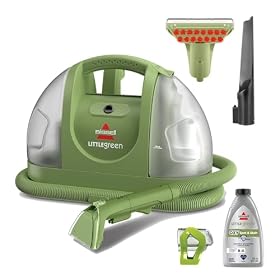
A portable cleaner makes the most sense when you regularly need to clean carpeted stairs, landings, furniture, car interiors, or small pet stains. You carry the compact machine to the area and use a hose-mounted tool rather than pushing a large cleaning head over every step.
Look for these practical features:
A manageable filled weight: Check the machine's weight with empty and full tanks if those specifications are available. Water adds significant weight.
A sufficiently long hose: A short hose may force you to place the cleaner on each stair or landing. A longer hose can let the machine remain on a stable floor.
A long power cord: This reduces the need to change outlets while working up a staircase.
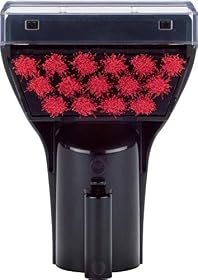
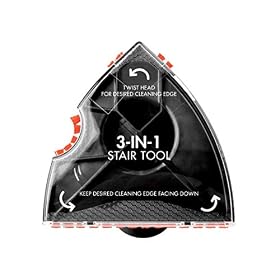
A narrow stair or upholstery tool: The tool should fit the tread and riser without requiring awkward wrist angles.
Separate clean- and dirty-water tanks: This makes it easier to control fresh solution and dispose of recovered water.
Easy tank removal: Small tanks fill and empty more often, so a difficult latch or narrow opening becomes frustrating.
A portable unit is not automatically lightweight once filled. Before buying, consider whether you will carry it with water inside or fill it at the cleaning location. For a staircase, keep the machine on a level landing or floor whenever the hose allows it. Do not leave a powered cleaner where it can fall down the stairs.
Product prices and availability are accurate as of the date/time indicated and are subject to change. Any price and availability information displayed on Amazon.com at the time of purchase will apply to the purchase of this product.
Choose an upright if you are cleaning whole floors
An upright is usually the better choice when your priority is cleaning multiple rooms of wall-to-wall carpet. Its wider cleaning head covers more area per pass, and its larger tanks can reduce the number of stops for refilling and emptying.
An upright may also be preferable when:
You clean large carpeted rooms several times a year.
You want to make long, consistent passes across open floor space.
You need stronger agitation from a full-width brush system.
You have storage space on the same floor as the carpet being cleaned.
The machine's hose and stair tool are adequate for occasional stair cleaning.
The tradeoff is handling. An upright becomes harder to lift when the clean-water tank is full or the recovery tank contains dirty water. Its height and wheel layout can also make it difficult to position securely on stairs. Unless the manufacturer specifically describes stair use, do not operate an upright on steps in a way that could make it tip or slide.
Product prices and availability are accurate as of the date/time indicated and are subject to change. Any price and availability information displayed on Amazon.com at the time of purchase will apply to the purchase of this product.
The decision depends on how much carpet you clean
Mostly stairs, spots, pets, or upholstery
Choose a portable cleaner. Its smaller footprint and hose-based design are better matched to small, irregular jobs. A portable can also be useful if different floors need occasional cleaning but no single floor has enough carpet to justify an upright.
One or more large carpeted floors
Choose an upright, provided you can store and move it safely. The wider head and larger tanks are more important than portability when cleaning time and coverage matter.
Stairs plus large rooms
There are two sensible approaches:
Use an upright with a capable hose and stair tool if most cleaning is on one floor and the stair work is occasional.
Use a portable cleaner for stairs and an upright for rooms if both tasks are frequent and you have the storage space.
Buying two machines is not necessary for everyone. If budget or storage is limited, choose based on the job you do most often rather than the job that is most difficult once in a while.
Product prices and availability are accurate as of the date/time indicated and are subject to change. Any price and availability information displayed on Amazon.com at the time of purchase will apply to the purchase of this product.
Compare the specifications that affect upstairs use
Carry weight, not just listed machine weight
A cleaner's advertised weight may exclude water, formula, or accessories. For upstairs work, the filled weight and carrying handle matter more than the empty specification. A compact body with a centered handle is generally easier to control than a bulky machine with a narrow or poorly placed grip.
Hose reach and tool design
For stairs, hose reach often matters more than the machine's cleaning width. You should be able to place the unit on a stable surface while reaching the step being cleaned. Check whether the hose stores securely and whether the stair tool has a shape suited to narrow treads.
Tank capacity
Large tanks mean fewer interruptions, but they also add weight. Small tanks are easier to carry but may require several refills during a staircase or upholstery job. Choose capacity based on the size of your usual jobs, not simply the largest tank available.
Brush action and suction
Brush agitation helps loosen embedded soil, while suction removes liquid and suspended dirt. A portable cleaner can work well for concentrated stains, but its smaller tool may require slower passes and more overlap. An upright is generally more efficient on broad, evenly carpeted areas.
Do not judge cleaning performance from suction claims alone. The brush design, spray control, tool width, airflow path, and your cleaning technique all affect the result.
Cord length and storage
A long cord can be useful on stairs, but it also creates a trip hazard. Route the cord away from the steps and keep it clear of wet areas. Compact portable cleaners are often easier to store, while upright cleaners may need a dedicated closet or floor space.
How to clean stairs with a portable machine
Vacuum loose dirt, hair, and grit first.
Read the carpet and machine instructions, especially for wool, delicate fibers, or specialty rugs.
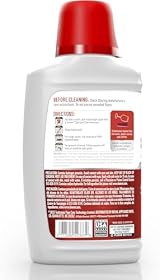
Fill the clean-water tank with the recommended water and formula mixture. Do not add unapproved detergents or excessive soap.
Put the cleaner on a stable landing or floor where possible.
Work from the upper steps downward so you do not walk across freshly cleaned carpet.
Use controlled wet passes followed by slower dry passes. Avoid saturating the carpet.
Empty and rinse the recovery tank when it reaches its limit.
Allow the stairs to dry fully with ventilation before normal use.
Never carry a plugged-in machine by its cord, and do not use an extension cord unless the manufacturer permits it and the cord is properly rated. Keep electrical connections away from standing water.
When an upright's stair tool is enough
An upright can be a reasonable compromise if it has a hose that reaches the stairs, a tool wide enough to cover the tread, and a secure way to remain on the floor while you work. It is most practical when stair cleaning is occasional and the machine is primarily for rooms.
Before choosing this setup, check:
Whether the hose reaches from a stable floor or landing.
Whether the tool can clean both the tread and riser.
Whether the hose connection stays secure under tension.
Whether the machine can be parked without blocking the staircase.
Whether the manufacturer allows the intended stair-cleaning configuration.
If you must lift the upright onto every step, or if the hose pulls the machine toward the edge, a portable cleaner is the safer and more convenient choice.
Common buying mistakes
Choosing by empty weight alone
A machine that seems light in a product listing may be much heavier with water and accessories. Account for the actual lifting situation in your home.
Buying a small tank for frequent large-room cleaning
Portable convenience does not compensate for constant refilling if you clean several large rooms. In that situation, an upright's capacity and cleaning width may save substantial time.
Assuming every hose tool is a stair tool
A general upholstery nozzle may not cover a stair tread comfortably. Check the tool shape, hose reach, and manufacturer guidance.
Using too much formula
Extra detergent can leave residue that attracts soil and may create excessive foam in the recovery system. Follow the cleaner and formula instructions.
Ignoring drying time
A machine that removes water well still leaves carpet damp. Plan ventilation and avoid heavy traffic until the carpet is dry.
Bottom line
Choose a lightweight portable carpet cleaner if you are mainly dealing with stairs, pet accidents, upholstery, cars, and small areas. Choose an upright carpet cleaner if you regularly clean large carpeted rooms and can move and store the machine safely. If you need both capabilities, prioritize the format that matches your most frequent job, then confirm that its hose, tool, tank, and filled weight work for the upstairs cleaning you actually plan to do.
FAQ
Is a portable carpet cleaner better for stairs than an upright?
Usually, yes. A portable cleaner is easier to carry and can stay on a stable landing while you use its hose and stair tool. An upright may work for occasional stairs if its hose reaches safely from the floor, but lifting it onto each step is awkward and potentially unsafe.
Can a portable carpet cleaner replace an upright?
It can replace an upright for spot cleaning, stairs, upholstery, and small carpeted areas. For frequent whole-room cleaning, an upright is usually faster because it has a wider cleaning path and larger tanks.
Should I carry a carpet cleaner upstairs with water in the tank?
Avoid carrying more water than necessary. Empty or partially fill the machine before lifting it when practical, and use the manufacturer's carrying instructions. A full tank increases weight and can make the cleaner harder to control.
What matters most in a carpet cleaner for stairs?
Filled carrying weight, hose reach, stair-tool shape, tank handling, cord length, and safe placement matter most. A wide floor-cleaning head is less important than a hose that reaches the steps from a stable surface.