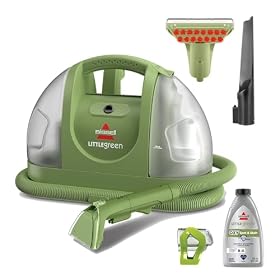
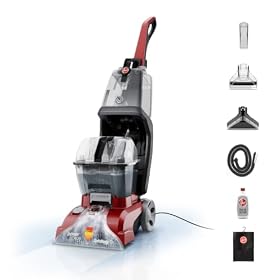
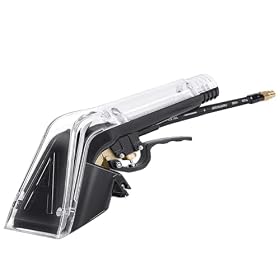
The best carpet cleaner for stairs is usually a compact portable machine with a long hose, a stair or upholstery tool, manageable weight, and enough suction to recover water without repeated trips up and down the staircase.
Best carpet cleaner for stairs
The best carpet cleaner for stairs is usually a portable carpet or upholstery cleaner, not a large upright. Stairs are easier to clean with a lightweight machine, a hose long enough to reach several steps, and a narrow tool that can scrub and extract water from each tread and riser.
What makes a carpet cleaner good for stairs?
1. Portable size and manageable weight
A compact machine is easier to carry up and down stairs and can sit on a landing while you work. Check the cleaner’s empty weight, not just its shipping weight. A full tank can make a portable unit noticeably heavier.
Look for:
A built-in carrying handle
A stable base that will not tip easily
Separate clean- and dirty-water tanks, if available
A tank that can be removed without spilling
Controls that are easy to reach while holding the hose
An upright cleaner may have a larger brush head and tank, but it can be awkward or unsafe on stairs. It may still be useful for the surrounding floors, while a portable extractor handles the steps.
2. A long, flexible hose
Hose reach is one of the most important specifications for stair cleaning. A short hose may force you to move the machine after every few steps, while an overly stiff hose can pull the machine toward the edge of the staircase.
Whether the machine can remain on a landing while the hose reaches the steps
Whether the hose connection locks securely
Manufacturer-listed hose length does not always equal practical reach. The machine itself, the stair angle, and the position of the outlet all affect how much working distance you get.
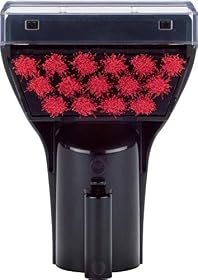
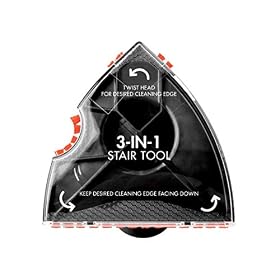
3. A narrow stair or upholstery tool
A wide floor head is not necessary for most stairs. A narrow hand tool is easier to control on treads and risers and can reach into corners near the wall and trim.
A useful stair tool should have:
A width that fits comfortably across the tread
A transparent section so you can see extracted water and debris
A spray trigger or control that is easy to operate
A suction opening that stays flat against the carpet
A shape that can reach the junction between the tread and riser
Some cleaners include a dedicated stair tool; others include only a general upholstery attachment. Either can work if the tool is narrow enough and compatible with the machine’s spray and suction connections.
4. Strong water recovery without excessive saturation
For stairs, water recovery matters more than having the biggest tank. Carpet that remains wet for too long can develop odors and may be vulnerable to mildew, especially in poorly ventilated areas.
Look for a cleaner designed for extraction and pay attention to how the manufacturer describes its suction or water-recovery system. Avoid relying on an advertised motor-wattage number alone. Electrical input does not directly tell you how effectively a machine lifts dirty water from carpet.
Good technique also affects drying:
Make a slow spray pass over a small section.
Release the spray and make one or more slow suction-only passes.
Stop spraying before the carpet becomes visibly saturated.
Use fans or open windows to improve airflow when practical.
Portable carpet cleaner versus upright carpet cleaner for stairs
Portable carpet and upholstery cleaners
These are usually the easiest choice for stairs because the hose and hand tool do the work. They are generally easier to carry and position on a landing, and they can also clean upholstery, car interiors, and small spills.
Their limitations may include a smaller tank, a smaller cleaning path, and more manual work because you clean each section with a hand tool.
Upright carpet cleaners
Uprights are designed to move across large carpeted rooms. They can be efficient on open floors, but their size, weight, and full-width cleaning head make stairs more difficult.
If you are buying one machine for both rooms and stairs, check whether the upright includes a hose and compatible stair or upholstery tool. Do not assume that every upright can safely or effectively clean stairs with its main floor head.
Spot cleaners
A small spot cleaner can be a practical choice for occasional stair stains or pet accidents. It is especially convenient when storage space is limited. For a full flight of heavily soiled stairs, however, a larger portable extractor may reduce refill and emptying interruptions.
Product prices and availability are accurate as of the date/time indicated and are subject to change. Any price and availability information displayed on Amazon.com at the time of purchase will apply to the purchase of this product.
Features that affect the buying decision
Tank capacity
A larger tank means fewer refills, but it also adds weight. For stairs, a smaller tank can be preferable if it keeps the machine easier to carry. Consider how many steps you normally clean and whether a nearby sink is available.
Separate tanks are convenient because clean water and recovered water stay apart. A combined tank can be simpler, but it may require more careful emptying and cleaning.
Cord length and outlet access
A longer power cord can reduce the need to change outlets, but it also creates a trip hazard on stairs. Route the cord away from the walking path and keep it clear of wet areas.
Never operate an electric carpet cleaner where the cord, plug, or outlet may become wet. Follow the manufacturer’s electrical and extension-cord instructions; if an outlet or cord appears damaged, stop using the machine.
Tool storage
On stairs, it helps when the hose, tool, and cord have dedicated storage points. Loose accessories can fall down the staircase or leave you balancing the machine and tool at the same time.
Cleaning-formula compatibility
Use only the cleaning formula recommended for the machine and carpet type. Too much detergent can leave sticky residue that attracts more soil. Some carpet manufacturers also restrict certain cleaning chemicals or methods, so check the carpet-care instructions before deep cleaning.
Product prices and availability are accurate as of the date/time indicated and are subject to change. Any price and availability information displayed on Amazon.com at the time of purchase will apply to the purchase of this product.
How to clean carpeted stairs safely
Vacuum first. Remove loose dirt, hair, and grit so the extractor does not turn them into muddy residue.
Check the carpet-care label. Confirm that wet extraction is appropriate.
Test an inconspicuous area. Look for color bleeding, texture changes, or damage after the area dries.
Place the machine securely. Keep it on a stable landing or floor rather than balancing it on a stair tread.
Start at the top. Work downward so you do not step on freshly cleaned carpet.
Clean one small section at a time. Treat the tread, front edge, and riser without flooding the carpet.
Make extra dry passes. Suction-only passes help remove remaining moisture.
Dry the staircase completely. Use ventilation and keep people and pets off the carpet until it is dry.
If the stairs have open sides, unusual shapes, or narrow landings, take extra care to keep the machine and cord from falling. Do not carry a running machine while climbing. Turn it off and secure the hose and cord before moving it.
Product prices and availability are accurate as of the date/time indicated and are subject to change. Any price and availability information displayed on Amazon.com at the time of purchase will apply to the purchase of this product.
When a portable spot cleaner is the better choice
Choose a portable spot cleaner when you mainly need to handle:
Pet accidents on individual steps
Small food or drink spills
High-traffic marks near the bottom of a staircase
Occasional upholstery and car-interior cleaning
A few carpeted steps rather than an entire home
Choose a larger portable extractor when you regularly clean a full flight, have thick carpet, or want a larger dirty-water capacity. If most of your home has wall-to-wall carpet, an upright plus a hose-based stair tool may be more versatile, provided the model is designed for that attachment.
Common stair-cleaning problems
The carpet stays wet
Use less solution, slow down your extraction passes, and make additional passes without spraying. Check whether the tool is sealing flat against the carpet. If water recovery remains poor, inspect the dirty tank lid, gasket, hose connections, and tool for leaks or blockage.
The cleaner loses suction
Unplug the machine before inspecting it. Empty the dirty-water tank, reseat its lid, check the hose for a clog, and clean the tool opening. Replace a damaged seal or hose if air is entering the system. If the motor makes unusual noises, smells hot, trips a breaker, or still lacks suction after these checks, stop using it and follow the manufacturer’s service guidance.
The machine tips or pulls toward the stairs
Move it to a stable landing, shorten the unsupported hose span, and keep the cord away from the stair edge. Do not place a full machine on a step where it could fall.
The carpet looks dull after cleaning
Residue from excess formula can attract soil. Follow the recommended dilution and avoid repeated wet passes. If the carpet’s color or texture changes, discontinue cleaning and consult the carpet manufacturer or a professional cleaner.
When replacement makes sense
A replacement tool, hose, tank lid, or gasket is reasonable when the cleaner otherwise operates normally and the manufacturer offers compatible parts. Replace the machine when the tank or housing is cracked, electrical components are damaged, the motor repeatedly overheats, or repair parts are unavailable.
For a single stain, professional cleaning may be more sensible than buying a machine. For recurring pet messes or frequent stair maintenance, a compact extractor with a suitable hand tool is usually the more practical long-term setup.
FAQ
Can you use an upright carpet cleaner on stairs?
Sometimes, but only if the manufacturer says the machine and its hose or stair tool are suitable for stair cleaning. The main floor head is usually awkward on steps. A portable cleaner with a hand tool is generally easier to control.
What hose length is best for cleaning stairs?
Choose enough hose to reach several steps while the machine remains on a stable landing. The ideal length depends on the staircase layout, so compare the listed hose length with the distance from a safe machine position to the farthest step.
Should I start cleaning stairs at the top or bottom?
Start at the top and work downward. This keeps you from stepping on freshly cleaned carpet and makes it easier to move the machine as you progress.
How do I keep carpeted stairs from getting too wet?
Use controlled spray passes, avoid overapplying formula, and make several slow suction-only passes. Improve airflow with fans or ventilation, and keep the stairs out of service until the carpet is fully dry.
Is a spot cleaner enough for a full staircase?
It can handle occasional stains and small sections, but a larger portable extractor may be more convenient for a heavily soiled full flight because it can reduce tank refills and emptying interruptions.