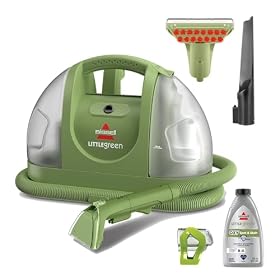
The best carpet cleaner for pets combines strong water extraction with a brush system and tools that can handle tracked-in dirt, urine spots, vomit, and other common messes. Here is how to choose one without overbuying.
Best carpet cleaner for pets
The best carpet cleaner for pets is one that removes the stain and as much moisture as possible—not simply one that makes the carpet smell cleaner. Look for a machine with effective water extraction, an agitation brush, a pet-focused hand tool, separate clean- and dirty-water tanks, and a cleaning formula designed for your carpet and stain type.
For occasional accidents, a compact spot cleaner may be the most practical choice. For whole-room cleaning, choose a full-size upright with wider cleaning coverage and larger tanks.
Choose the right type of carpet cleaner
Portable spot cleaner
A portable cleaner is useful for fresh accidents, stairs, upholstery, car interiors, and small areas. It is easier to carry and store than an upright, but the smaller tank usually means more refilling and emptying during a large cleaning job.
Choose this type if your main problems are:
Urine spots and small repeat accidents
Vomit, mud, or food stains
Pet beds, stairs, and upholstery
Quick cleanup between deeper carpet cleanings
Upright carpet cleaner
An upright is better for cleaning an entire room or several carpeted areas. Its wider cleaning head covers more carpet per pass, and its larger tanks reduce interruptions. It is heavier and takes more storage space, so it may be excessive if you only clean isolated spots.
Choose an upright if you need to:
Refresh large carpeted rooms
Clean high-traffic paths regularly
Remove accumulated dirt and dander
Extract more water over a broad area
Carpet cleaner with a separate hose or hand tool
A hose and hand tool add flexibility for stairs, furniture, edges, and localized pet stains. Check how the hose connects and whether the tool is included rather than assuming every advertised “pet” model has the same attachments.
Features that matter for pet messes
Water extraction
Extraction is one of the most important specifications, although manufacturers do not always publish directly comparable suction measurements. A cleaner that leaves carpet very wet can lengthen drying time and increase the risk of musty odors.
Look for a design that allows several slow cleaning passes and separate dry passes. Follow the manufacturer’s instructions for how many wet and dry passes to make; excessive water is not automatically better cleaning.
Agitating brush
A rotating or powered brush helps loosen soil trapped around carpet fibers. It is especially useful for muddy paw prints and traffic lanes, but it can be unsuitable for delicate rugs or some looped carpets. Check the carpet manufacturer’s care instructions before using a powered brush.
A brush can also wrap with hair. Easy brush-roll access and removable hair from the nozzle or brush area make routine maintenance less frustrating.
Pet hand tool
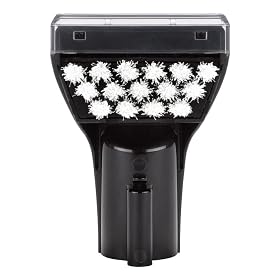
A small powered or bristled pet tool is useful for concentrated stains and stairs. It should have a cleaning path that is large enough to be useful but narrow enough to target the mess. A tool with channels that are easy to rinse is preferable because pet residue can dry inside the nozzle.
Separate clean- and dirty-water tanks
Separate tanks keep fresh solution away from recovered water and make it easier to see when the dirty tank needs emptying. Larger tanks reduce interruptions, but they also add weight when full. Tank capacity is therefore a convenience specification, not a direct measure of cleaning ability.
Check whether the tanks are easy to remove, carry, empty, and rinse. A tank that is difficult to clean can develop odors over time.
Hose length and cord reach
A longer hose helps with stairs, upholstery, and areas where moving the main unit is awkward. A longer power cord can reduce outlet changes. These features matter more in homes with multiple levels or limited outlets than in a single small room.
Formula compatibility
Use only the cleaning solution recommended by the machine manufacturer and appropriate for the carpet. Too much formula can leave a sticky residue that attracts more dirt. Enzyme-based pet formulas may help with organic messes and odors, but they are not interchangeable with every machine’s approved solution.
For urine contamination, surface cleaning may not remove odor from carpet padding or the subfloor. If the smell returns after the area is dry, the problem may be deeper than the carpet fibers.
Product prices and availability are accurate as of the date/time indicated and are subject to change. Any price and availability information displayed on Amazon.com at the time of purchase will apply to the purchase of this product.
What to look for by pet problem
Urine accidents
Prioritize targeted extraction, a narrow hand tool, and a compatible pet or enzyme formula. Blot or remove solids first, then treat according to the product instructions. Avoid saturating the area repeatedly, particularly over wood flooring or carpet installed over moisture-sensitive materials.
If urine has reached padding or the subfloor, a carpet cleaner may improve the surface but may not solve the odor permanently. Repeated accidents in the same area can also indicate an underlying pet-health or behavior issue that requires veterinary or training advice.
Mud and tracked-in dirt
An upright with a powered brush is generally more useful for broad muddy traffic lanes. Let heavy mud dry when practical, then remove loose soil before wet cleaning. Cleaning saturated mud immediately can spread it through the carpet.
Vomit, food, and organic stains
Remove solids carefully before using the machine. A hand tool gives better control over small areas. Use a compatible formula and avoid scrubbing aggressively, which can push material deeper or damage carpet fibers.
Pet hair and dander
A carpet cleaner is not a dry vacuum. Vacuum loose hair and debris first, using a pet-hair vacuum or suitable attachment. Otherwise, hair can clog the brush, nozzle, hose, or dirty-water pathway and reduce performance.
Odors
Cleaning the visible stain does not always eliminate odor. Odor control depends on the contaminant, how long it has been present, the carpet backing, and whether padding is affected. Do not mask persistent odors with excessive fragrance or cleaning solution.
Product prices and availability are accurate as of the date/time indicated and are subject to change. Any price and availability information displayed on Amazon.com at the time of purchase will apply to the purchase of this product.
How to use a carpet cleaner for better pet-stain results
Remove loose debris. Pick up solids and vacuum hair, grit, and dried soil.
Check the carpet. Confirm that wet cleaning is allowed and test the formula in a hidden area for colorfastness.
Pre-treat when directed. Use a compatible pre-treatment and observe its required dwell time.
Avoid flooding the area. Make controlled wet passes rather than repeatedly soaking one spot.
Make extraction passes. Move slowly and use the machine’s recommended dry-pass technique.
Rinse or clean the machine. Empty the dirty tank, rinse removable parts, and clear hair from the brush and nozzle.
Dry the carpet quickly. Increase airflow with ventilation or fans, and keep pets off the area until it is dry.
Never mix carpet formulas, disinfectants, bleach, ammonia, or household cleaners unless the manufacturer specifically says the combination is safe. Mixing chemicals can create dangerous fumes or damage the carpet and machine.
Product prices and availability are accurate as of the date/time indicated and are subject to change. Any price and availability information displayed on Amazon.com at the time of purchase will apply to the purchase of this product.
Common buying mistakes
Choosing by “pet” branding alone: A pet label does not guarantee strong extraction or a useful attachment.
Ignoring maintenance: Hair and residue require regular cleaning of brushes, hoses, tanks, and filters where fitted.
Buying a full-size unit for tiny accidents: A portable spot cleaner may be easier to reach and more likely to be used promptly.
Using too much solution: Extra detergent can leave residue and slow drying.
Skipping vacuuming: Loose pet hair can clog the wet cleaner.
Forgetting storage: The machine and hose need a dry place where tanks and parts can be emptied and air-dried.
Product prices and availability are accurate as of the date/time indicated and are subject to change. Any price and availability information displayed on Amazon.com at the time of purchase will apply to the purchase of this product.
When a carpet cleaner is not enough
Consider professional cleaning or carpet replacement when urine odor persists after thorough extraction, the padding is saturated, mold or mildew is suspected, the carpet has severe discoloration, or the backing has been damaged. For a single fresh accident, prompt blotting and appropriate spot treatment may be more effective than repeatedly running a large machine over the area.
The practical choice is usually a portable cleaner for frequent small accidents, an upright for whole-room maintenance, or both if pets regularly create localized messes while the rest of the home also needs deep cleaning.
FAQ
What type of carpet cleaner is best for pet urine?
A portable spot cleaner with strong extraction, a targeted hand tool, and a manufacturer-approved pet or enzyme formula is usually the most convenient for fresh localized accidents. Persistent odor may indicate contamination in the padding or subfloor, which a surface cleaner may not fix.
Are carpet cleaners safe for pet hair?
They can clean carpet after loose hair has been vacuumed first. Excess hair may wrap around the brush or clog the nozzle and dirty-water path. Clean the brush and other removable parts after each heavily soiled job.
Is a portable or upright carpet cleaner better for pets?
A portable model is easier for spot accidents, stairs, upholstery, and pet beds. An upright is better for large rooms and high-traffic carpet. Homes with frequent accidents and broad carpeted areas may benefit from using each type for its intended job.
How long should carpet dry after cleaning?
Drying time depends on carpet thickness, humidity, airflow, how much water was applied, and the machine’s extraction performance. Use controlled wet passes, make the recommended dry passes, improve airflow, and keep pets off the carpet until it is fully dry.