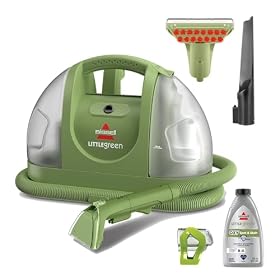
A carpet cleaner loosens soil with water and cleaning solution, agitates the carpet fibers, then extracts the dirty liquid into a separate tank.
What a carpet cleaner does
A carpet cleaner applies water and cleaning solution to carpet, loosens soil with a brush or other agitation, and uses suction to pull the dirty liquid into a recovery tank. It is an extractor, not usually a steam cleaner: most home machines clean with water and formula rather than steam.
The machine removes much of the moisture, but it does not leave carpet completely dry. Drying depends on how much liquid was applied, how well the machine extracted it, airflow, and room conditions.
Product prices and availability are accurate as of the date/time indicated and are subject to change. Any price and availability information displayed on Amazon.com at the time of purchase will apply to the purchase of this product.
How the main parts work
Clean-water tank: Holds water and, when the machine calls for it, carpet-cleaning formula. Some models mix formula from a separate tank.
Pump and spray nozzles: Move cleaning solution onto the carpet when you press a trigger or select a cleaning mode.
Brush or agitator: Helps loosen soil from carpet fibers. Some machines use rotating brushes; others use a different form of agitation.
Suction path: Pulls loosened soil and liquid through the machine.
Recovery tank: Collects the extracted dirty water. It must be emptied and cleaned as directed.
Filter or screen: Keeps debris from entering parts of the suction system. Its location and maintenance requirements vary by model.
A blockage, dirty filter, poor seal, or improperly seated tank can reduce extraction even if the pump still sprays.
Product prices and availability are accurate as of the date/time indicated and are subject to change. Any price and availability information displayed on Amazon.com at the time of purchase will apply to the purchase of this product.
What happens during a cleaning pass
The machine sprays solution. The formula and water wet the carpet surface and help loosen soil. Follow the label and machine instructions for dilution; more detergent is not necessarily better.
The brush agitates the fibers. Agitation helps lift embedded dirt and residue so it can be collected.
The suction nozzle extracts liquid. Moving the machine at the recommended pace lets it recover more of the loosened soil and moisture.
The dirty water collects in the recovery tank. When the tank reaches its fill limit, the machine may stop extracting or need to be emptied.
The carpet dries. Additional suction-only passes, if allowed by the manual, can remove more moisture. Ventilation and airflow help with the remaining drying time.
For best results, vacuum first, avoid soaking the carpet, and make slow passes as directed. On a stain, blot up excess liquid before cleaning and test the cleaner and formula on an inconspicuous area if the carpet’s colorfastness is uncertain.
How upright and portable cleaners differ
Upright carpet cleaners cover larger floor areas and typically have a wider cleaning head and larger tanks. Portable cleaners are easier to carry to small spills, stairs, and upholstery, but their smaller cleaning path and tanks mean more frequent refilling and emptying.
Neither type is automatically right for every job. Check that the machine is intended for the surface you want to clean, and use an upholstery attachment only where the manufacturer permits it.
What affects cleaning and drying
Extraction performance: A machine that sprays but does not recover liquid well can leave carpet wetter. Check that the recovery tank is seated correctly, its lid and seals are in place, and the nozzle and filter are clear.
Brush condition: Hair, fibers, or worn components can interfere with agitation. Clean or replace parts only as the manual allows.
Formula and water use: Use the specified formula and dilution. Excess solution can leave residue or extend drying time.
Carpet and room conditions: Dense carpet, heavy soil, high humidity, and limited airflow can all slow drying. Keep people and pets off the carpet until it is dry.
If a machine suddenly loses suction, stop and check the tanks, seals, nozzle, hose, and filter before assuming the motor has failed. Unplug it before clearing debris or servicing parts, and follow the manufacturer’s instructions.
FAQ
Does a carpet cleaner use steam?
Most household carpet cleaners do not use steam. They apply water and cleaning solution, agitate the carpet, and extract the dirty liquid. Check the specific machine’s manual for its cleaning method.
Does a carpet cleaner leave the carpet dry?
No. It extracts much of the cleaning liquid, but some moisture remains. Slow extraction passes, ventilation, and airflow can help the carpet dry sooner.
Should I vacuum before using a carpet cleaner?
Yes. Vacuuming first removes loose dirt and debris so the carpet cleaner can focus on soil embedded in the fibers. Follow the machine’s instructions for any exceptions.
Can I use any cleaning solution in a carpet cleaner?
Use a formula approved for the machine and follow its dilution instructions. An unsuitable or overly concentrated solution can cause excess suds, residue, or machine problems.