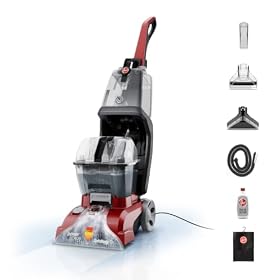
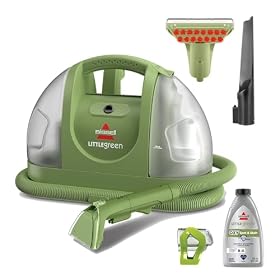
A carpet cleaner can work on some area rugs, but the rug’s fiber, dye, backing, and care label matter more than the machine’s advertised power. Check compatibility before cleaning and choose a machine that’s easy to control and extract with.
A carpet cleaner can refresh many synthetic area rugs, but it isn’t right for every rug. Before buying or using one, check the rug’s care label, fiber, dyes, and backing. Natural fibers and delicate construction may need professional or low-moisture cleaning, while a machine with controlled water use and effective extraction can be practical for compatible rugs.
Check the rug before you choose a cleaner
Read the care label or manufacturer’s instructions first. If they prohibit wet cleaning, follow that guidance rather than testing a machine on the rug.
Synthetic rugs: Some polyester, nylon, and polypropylene rugs can tolerate water extraction, but construction and backing still matter. Confirm the care instructions.
Wool: Use only a method and cleaning formula approved for that rug. Wool can shrink, distort, or lose color if cleaned improperly.
Silk, viscose, rayon, jute, and sisal: These fibers can be especially sensitive to moisture. Don’t use a carpet cleaner unless the rug’s care instructions specifically allow it; professional cleaning may be safer.
Dyes and backing: A rug can bleed color or its backing can loosen or deteriorate when wet. Test a small hidden area using the intended method and solution, then check for color transfer or damage after it dries.
If you can’t identify the fiber or the rug has a valuable, delicate, or unstable backing, ask a rug-cleaning professional before using an extractor.
What to look for in a carpet cleaner
For a compatible area rug, prioritize control and manageable cleanup over a machine’s size or number of features.
Water and solution control: A machine that lets you apply cleaning solution in deliberate passes can help limit how much moisture goes into the rug. Follow its instructions; don’t assume every machine has adjustable dispensing.
Extraction: The cleaner needs to recover as much dirty water as practical. Make extra slow suction-only passes if the manual allows them, and stop if the rug is getting saturated.
Cleaning path and handling: A wide upright can cover a large, low-pile rug efficiently, but can be awkward on a small rug or around fringe. A portable cleaner with a hose may be easier to control on spots and smaller rugs, though it takes more passes over a large area.
Tank capacity and weight: Larger tanks mean fewer refills but add weight. Consider where you’ll fill and empty the machine and whether you can move it easily around the rug.
Approved solutions and tools: Use only formulas and attachments permitted by both the cleaner manufacturer and rug-care instructions. A tool intended for upholstery or stairs may offer more control around edges, but it doesn’t make an incompatible rug safe to wet-clean.
Product prices and availability are accurate as of the date/time indicated and are subject to change. Any price and availability information displayed on Amazon.com at the time of purchase will apply to the purchase of this product.
Clean an area rug with less risk
Vacuum first. Remove loose dirt and debris before using water. Check the rug’s care instructions for any vacuuming restrictions.
Test the method. On a hidden spot, use the intended cleaner and solution as directed. Let the area dry fully and check for dye transfer, texture changes, or backing damage.
Protect the floor underneath. Move the rug to a suitable surface if possible. Otherwise, use a waterproof barrier that won’t damage the floor, and keep moisture from collecting beneath the rug.
Use light, even passes. Follow the machine’s instructions and avoid repeated wet passes over the same area. Keep the cleaner away from fringe unless the rug’s care instructions say it is safe to clean there.
Extract and dry promptly. Make additional suction passes if allowed, then dry the rug flat with good airflow. Don’t put it back on the floor or walk on it until it is fully dry, including the backing.
If the rug starts bleeding color, puckering, shedding unusually, or releasing from its backing, stop. Blot up excess moisture without scrubbing and contact a rug-care professional if damage or persistent dampness is a concern.
Product prices and availability are accurate as of the date/time indicated and are subject to change. Any price and availability information displayed on Amazon.com at the time of purchase will apply to the purchase of this product.
Product prices and availability are accurate as of the date/time indicated and are subject to change. Any price and availability information displayed on Amazon.com at the time of purchase will apply to the purchase of this product.
FAQ
Can I use an upright carpet cleaner on an area rug?
Only if the rug’s care instructions allow wet extraction and the cleaner’s instructions permit the intended use. An upright may be convenient for a large, low-pile rug, but can be difficult to control around fringe or on a small rug.
Can I use a carpet cleaner on a wool area rug?
Not automatically. Check the rug’s care instructions and use only an approved cleaning method and formula. If instructions are unclear, ask a rug-cleaning professional.
Should I use regular carpet-cleaning solution on an area rug?
Use a solution only when both the carpet cleaner manufacturer and rug-care instructions allow it. Test it on a hidden area and let that spot dry before cleaning the whole rug.
How long should an area rug dry after machine cleaning?
Drying time varies with the rug, backing, moisture applied, airflow, and room conditions. Keep the rug flat with airflow and wait until it is fully dry, including underneath, before returning it to the floor.